
THE GERMANS ARE COMING
Watching the parachutes fall from his home on the Dutch coast is former footballer Billy Marsden. It is ten years to the day since a German surgeon saved his life in a Berlin hospital after he suffered a career ending spinal injury while playing for England – the irony isn't lost on him that now it is a German invasion that is putting his life in jeopardy.
DOGFIGHTS OVER THE HAGUE
In The Hague, Margot Fonteyn and the Sadler’s Wells Ballet watch dogfights from the roof of their hotel. In Amsterdam British journalist David Woodward and his American wife, NBC war correspondent Margaret Rupli, are trying to file the story of the invasion of Holland, while young British diplomat, Peers Carter, organises an evacuation just eight months into his career.
THE LAST BOAT HOME
Set across one weekend in May 1940, this is the story of how these people came together, along with three million pounds of industrial diamonds, to escape from Holland on the SS Dotterel, the last British boat to leave the country before the Netherlands capitulated. Order Chris Hunt's book 'Escape From Holland' to read this thrilling true story.
THE CAST OF REAL LIFE CHARACTERS IN ESCAPE FROM HOLLAND
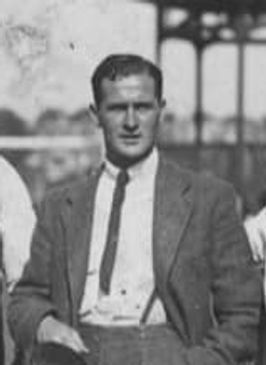
BILLY MARSDEN
DAVID WOODWARD & MARGARET RUPLI
BILLY MARSDEN
Sheffield Wednesday's Billy Marsden was making his third appearance for the England team when suffered the injury that ended his playing career. Subsequently working in The Hague as a football coach when the Germans invaded in May 1940, he came under gunfire while attempting to catch the last boat back to England. He returned after the war and coached former club HBC once again.

PEERS CARTER
DAVID WOODWARD & MARGARET RUPLI
BILLY MARSDEN
Just eight months into a career in the diplomatic service when the Germans invaded, Peers Carter found himself in charge of the "British evacuation". Later in WW2 he joined General Leclerc's free French army on a 1500 mile fight across the desert. He would also serve as Great Britain's ambassador to Afghanistan. Chris Hunt's book 'Escape From Holland' tells this true story.
DAVID WOODWARD & MARGARET RUPLI
DAVID WOODWARD & MARGARET RUPLI
DAVID WOODWARD & MARGARET RUPLI
'Escape From Holland' tells this true story of Meg Rupli, a rare woman's voice covering war on American network radio. She learned the basics of her craft from the legendary broadcaster Edward R Murrow and she was in Holland with her husband, the British journalist David Woodward of the News Chronicle, when the Germans invaded. Chris Hunt's 'Escape From Holland' tells their true story.
RICHARD BUSVINE
RICHARD BUSVINE
RICHARD BUSVINE
The managing director of an upmarket fashion house in Mayfair, when war broke out Richard Busvine reinvented himself as a war correspondent and persuaded the editor of the Chicago Daily Times to hire him. Chris Hunt's book 'Escape From Holland' tells the true story of Richard Busvine's World War 2 escape from the Netherlands
BOB GLENDENNING
RICHARD BUSVINE
RICHARD BUSVINE
An FA Cup winner with Barnsley, Bob Glendenning captained Bolton Wanderers before moving to the Netherlands in the 1920s. An Englishman, he spent 15 years as coach of the Dutch national team before having to escape from Holland on the last British boat, the SS Dotterel.
ROBERT HELPMANN
RICHARD BUSVINE
ROBERT HELPMANN
An Australian ballet dancer, choreographer, actor and director, Robert Helpmann got caught up in the German invasion while touring Holland as a member of the Sadler's Wells ballet. He is best remembered for his role as the child catcher in the film musical Chitty Chitty Bang Bang.
SAM WADSWORTH
ROBERT "JOCK" BARRIE
SAM WADSWORTH
During the First World War, Wadsworth lied about his age to enlist as an artillery gunner. As a footballer he played for Blackburn Rovers, Huddersfield Town and Burnley. He also captained the England football team in his final international game. He enjoyed a long career as a coach in Holland, returning after the war.
ALAN CARTER
ROBERT "JOCK" BARRIE
SAM WADSWORTH
A young dancer on a propaganda tour in the Netherlands with the Sadler's Wells Ballet Company when the Germans invaded, he is best remembered for his work after the war in films, most notably in The Red Shoes and The Tales of Hoffmann. He was evacuated back to the UK on the SS Dottrel
ROBERT "JOCK" BARRIE
ROBERT "JOCK" BARRIE
ROBERT "JOCK" BARRIE
A rear gunner in the RAF, Robert Barrie and his 'H for Harry' crew were shot down by the neutral Dutch on the way home from dropping propaganda leaflets over Germany. Interned by the Dutch, Barrie and his crew were released on the morning of the German invasion. Barrie made his way back to Britain on the last boat.
JULIA FARRON
CONSTANT LAMBERT
JIMMY MARSHALL
Of the Sadler's Wells touring party of 42 members who were in Holland when the Germans invaded the country in May 1940, Julia Farron was among the smallest and the youngest. She shared her memories of the Dutch tour with the author of 'Escape From Holland' before her death in 2019.
JIMMY MARSHALL
CONSTANT LAMBERT
JIMMY MARSHALL
Jimmy 'Sprinter' Marshall was a striker for Partick Thistle in his playing career. He subsequently enjoyed a successful coaching career in the Netherlands, where he settled and married Margaret Glendenning, the daughter of Dutch national team manager Bob Glendenning. Together with his wife, son and father-in-law he had to escape from Holland during the German invasion of the country.
CONSTANT LAMBERT
CONSTANT LAMBERT
CONSTANT LAMBERT
After his escape from Holland on the SS Dotterel on the weekend of the German invasion in May 1940, composer and conductor Constant Lambert became the founding music director of the Royal Ballet, and alongside Dame Ninette de Valois and Sir Frederick Ashton he was a major figure in the establishment of the English ballet as a significant artistic movement.
FREDERICK ASHTON
FREDERICK ASHTON
FREDERICK ASHTON
In the company known successively as the Vic-Wells Ballet, the Sadler's Wells Ballet and the Royal Ballet, Frederick Ashton was chief choreographer from 1935 until he succeeded de Valois as director of the company until 1970 He was a member of the Sadler's Wells touring party that got caught up in the German invasion of the Netherlands in May 1940.
DOUGLAS SLOCOMBE
FREDERICK ASHTON
FREDERICK ASHTON
In 1940, British cinematographer Douglas Slocombe was transitioning from a daring photojournalist into a key wartime newsreel cameraman. He was in Amsterdam when the Germans invaded and made his escape on the last British boat. He shared memories of his escapes from Poland (1939) and Holland (1940) with the author of 'Escape From Holland'.
JOHN HART
FREDERICK ASHTON
JOHN HART
Known to his friends as "Jack", Hart joined the Vic-Wells Ballet in 1938 and soon became a principal dancer. Between 1942 to 1946, Hart served in the British Royal Air Force. After his World War II service, Hart returned to England and began working with the Royal Ballet. He shared his memories of the Sadler's Wells tour of the Netherlands with the author of 'Escape From Holland'.
GORDON YOUNG
LEONARD MOSLEY
GORDON YOUNG
Journalist Gordon Young joined news agency Reuters in the early 1930s, serving as its Berlin correspondent for some of the decade. After covering the Soviet attack on Finland, he based himself in Holland and had to escape from the Netherlands on the last British boat out of the country – the SS Dotterel – when the Germans invaded in May 1940.
RALPH IZZARD
LEONARD MOSLEY
GORDON YOUNG
After making it onto the last British boat out of Holland, during the rest of World Wa r 2 Ralph Izzard worked in British Naval Intelligence and served under Ian Fleming, who would later base key aspects of James Bond on Lieutenant Commander Izzard. After the war, he returned to the Daily Mail as a foreign correspondent and he remained with the newspaper for his entire career.
LEONARD MOSLEY
LEONARD MOSLEY
LEONARD MOSLEY
After his escape from Holland, Leonard Mosley’s war saw him cover the great battles of the Western Desert, culminating in El Alamein, and later he parachuted into Yugoslavia. On D-Day he was dropped into Normandy with the 6th British Airborne Division, strapping a typewriter to his body for the jump. In later life he served the Daily Express as a film critic.
NINETTE DE VALOIS
CLAUDIA OSTERRIETH
NINETTE DE VALOIS
The driving force behind the Sadler's Wells Ballet and later the Royal Ballet, she was in charge of the Sadler's Wells touring party in Holland in 1940 when they narrowly escaped the German invasion of the Netherlands. She successfully led the company to safety, returning to Britain where they continued performing during the blitz.
GERALD SHEPHERD
CLAUDIA OSTERRIETH
NINETTE DE VALOIS
A plaque was unveiled at the British Foreign and Commonwealth Office, London, in November 2008, to commemorate those British diplomats who, by their personal endeavours, helped to rescue victims of Nazi racial policy. For his work as British Consul General in Danzig in the two years before the war and before his transfer to Amsterdam, Gerald Shepherd was among them.
CLAUDIA OSTERRIETH
CLAUDIA OSTERRIETH
CLAUDIA OSTERRIETH
A schoolchild when her Belgian family made their escape from Holland on the last British boat out of the Netherlands, she shared her evacuation story and details of her life in Hilversum with the author of 'Escape From Holland' before her death.
FRED PAGNAM
CURTIS BOOTH
CURTIS BOOTH
When the German invasion of Holland started, former Liverpool and Arsenal centre-forward Fred Pagnam lived in Haarlem with his Dutch wife and their daughter Mary. He made his escape with his family on the. SS Dotterel.
CURTIS BOOTH
CURTIS BOOTH
CURTIS BOOTH
Before he made his escape from Holland on the SS Dotterel, former Newcastle United and Norwich City striker, Curtis Booth, was manager of one of Amsterdam’s leading teams, Blauw-Wit. He had worked in the game all around the world, enjoying spells in Germany and Turkey, and he had led the Egyptian national side to the 1936 Berlin Olympics.
MATT BELL
CURTIS BOOTH
MATT BELL
Matt Bell was often known as Ginger in his playing days for Hull City and Nottingham Forest. As a coach he worked in the Netherlands, having to leave on the last British boat when the Germans invaded. His story of the invasion weekend is included in the book 'Escape From Holland' by Chris Hunt.
DANIEL MEAGHER
MORLEY RICHARDS
MORLEY RICHARDS
Along with his brother Joseph, Daniel Meagher was a member of the crew of the crew of the SS Dotterel during the weekend of the invasion of Holland. Younger brother Daniel died less than a year after the evacuation, killed when the Dotterel was torpedoed. He posthumously received the King’s Commendation for Brave Conduct.
MORLEY RICHARDS
MORLEY RICHARDS
MORLEY RICHARDS
After his escape from Holland, Richards stayed on the Daily Express as a military reporter and after the war he served the newspaper for many years as its news editor. He launched the short-lived Topic magazine as editor in 1961 and he wrote a regular column about the goings on in Fleet Street.
BILL YATES
MORLEY RICHARDS
BILL YATES
The former Bolton Wanderers and Watford goalkeeper Bill Yates made an early morning dash from Hilversum with his wife and three children to join the evacuation from Amsterdam. He is featured in the book 'Escape From Holland' by Chris Hunt.
MARGOT FONTEYN
CAPTAIN JOSEPH GREEN
CAPTAIN JOSEPH GREEN
Joining the Sadler's Wells Ballet at 14, Margot was 20 when she and the company got caught up in the German invasion of Holland. She remained with the company for her entire career and in the 1960s was one of the most recognisable women on the planet.
CAPTAIN JOSEPH GREEN
CAPTAIN JOSEPH GREEN
CAPTAIN JOSEPH GREEN
Captain Green received a special commendation from the Admiralty in recognition of his actions on the Dotterel over the weekend of the invasion of Holland in May 1940. He continued serving as a jobbing ship’s captain until his retirement in 1953.
REAR-ADMIRAL DICKENS
CAPTAIN JOSEPH GREEN
REAR-ADMIRAL DICKENS
Rear-Admiral Gerald Dickens was Naval Attaché to The Hague in 1940. He didn't make his escape on the Dotterel, but whether by accident or design, he played the pivotal role in despatching the steamer to take part in the evacuation. His grandfather was the celebrated writer Charles Dickens.
LIEUTENANT COLIN MADDEN
LIEUTENANT COLIN MADDEN
LIEUTENANT COLIN MADDEN
Commanding a demolition party the weekend of the invasion, he played a vital role in securing the port of IJmuiden and helping organize the evacuation on the SS Dotterel. He wsa awarded the Distinguished Service Cross (DSO)
TO COME
LIEUTENANT COLIN MADDEN
LIEUTENANT COLIN MADDEN
TO COME
TO COME
LIEUTENANT COLIN MADDEN
TO COME
TO COME